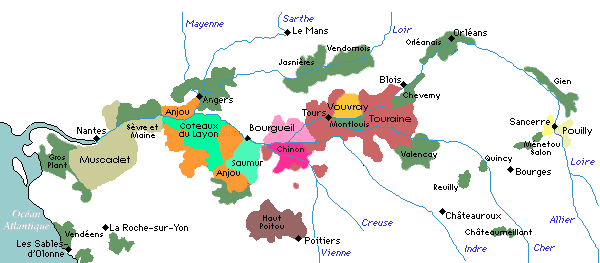
Location: From the Massif Central mountains to the Atlantic coast and Nantes cities. The Loire wine region follows the Loire river in its valley and the rivers flowing into (Cher, Loir, Layon, etc) Main Cities: Nantes, Tours, Angers, Bourges
Vineyards cover 30,000 hectares.
Annual wine production of over 400 million bottles.
Best known to tourists as the valley of French chateaux, due to its geographic location on the Atlantic coast and north of Bordeaux, the Loire produces wines from grapes that ripen more slowly than its more southerly cousins. The impact of a longer ripening as well as the Atlantic breezes is that the wines of this region are higher in acids and generally very refreshing.
The primary grape varietals grown in this area are Whites : Melon de Bourgogne (for Muscadet), Chenin Blanc, Sauvignon Blanc, and Chardonnay; Reds : Cabernet Franc, Pinot Noir, and Gamay.
Well-known AOCs : Chinon (Chenin Blanc), Muscadet (Melon de Bourgogne), Pouilly Fumé (Sauvignon Blanc), Sancerre (Sauvignon Blanc – white, Pinot Noir - red), Touraine (Chenin Blanc), and Vouvray (Chenin Blanc). Generally, these AOCs specialize in single varietal wines. The white wines of this region pair impressively well with shellfish, fish, and seafood.
Wines
West side of the Loire Valley wine regions (around Nantes) Muscadet
West side of the Loire Valley wine regions (around Nantes)
MUSCADET
Name
Appellation Muscadet Controlée, Appellation Muscadet Sèvre et Maine Controlée, Appellation Muscadet Coteaux de la Loire Controlée, Appellation Muscadet Côtes de Grandlieu Controlée
Location
Around the city of Nantes, from Ancenis to the Atlantic coast
Places
Vallet, La Haye Fouassière, Le Landreau, Mouzillon, La Chapelle Heulin, Château Thébaud, Maisdon sur Sèvre, Le Landreau, Saint Philbert de Grand Lieu
Soil
Granite
Size
12,500 ha (30,900 acres)
Production
almost 100 million bottles
Grapes
Melon (or Muscadet)
Type of Wine
Dry white wine, also sweet white wine
Age
Drink now and up to 2 years
Vintages
2005
Aromas
White flowers, Anise, Citrus
Food
Oysters, Shellfish, Aperitif
Cheese
Nantais
Muscadet is produced in 4 wine terroirs around the city of Nantes. The Muscadet Sèvre et Maine is the most important and the best of them. In the Muscadet region, wine makers use to leave the grape juice to rest during winter before putting the wine in bottle. Muscadet is a dry white wine that is a fine companion to shellfish. The quality of Muscadet varies very much from one winery to another.
Covers Maine et Loire department, west of Touraine
Places
Beaulieu sur Layon, Thouarcé, Martigné Briand, Saint Lambert du Lattay, La Pommeraye, Faye d'Anjou, Rochefort sur Loire, Rablay sur Layon, Brissac Quincé
Sweet rosé, Dry white wine, Light and medium body red wine
Age
Red: 2 to 6 years; White: 1 to 3 years; Rosé: now to 2 years
Vintages
2005, 2003
Aromas
Red: Black currant and black fruits, Red fruits; White: White flowers, Apricot, Crystallized fruit
Food
Red: Red meat;
White: Fish; Rosé: Cold meat
Cheese
White: Chabichou du Poitou; Red: Camembert, Crottin de Chavignol
Anjou wines are made around the city of Angers. They were very popular as soon as in the 6th century. During the 13th and 14th centuries, Anjou was one of the most popular wines in England. And then in Holland and Belgium. Nowadays Anjou is famous for the rosé d'Anjou. Rosé makes about half of the production in Anjou. However we should recommend the white wine from Anjou. New techniques and aging in oak barrel have improved the wine. Red wine from Anjou Villages deserve as well a special note.
COTEAUX DU LAYON
Name
Appellation Coteaux du Layon Controlée, Appellation Coteaux du Layon Villages Controlée, Appellation Chaume Premier Cru Controlée
Location
South of Angers city and West of Saumur, along the Layon river
Places
Rochefort sur Loire, Saint Lambert du Lattay, Beaulieu sur Layon, Saint Aubin de Luigné, Faye d'Anjou Concourson sur Layon, etc
Soil
Schist
Size
1,800 ha (4,450 acres)
Production
7 million bottles
Grapes
Chenin blanc
Type of Wine
Sweet white wine, Semi-dry white wine
Age
10 to 20 years
Vintages
2005, 2003, 1997, 1995, 1990, 1989
Aromas
Honey, Fig, Acacia
Food
Dessert wine
Cheese
Livarot, Maroilles, Pont l'Eveque
Coteaux du Layon is the widest wine area of the Anjou region. Along the Layon river, the vines are protected by the hills in this lovely contryside. Although wine makers produce a good semi-dry white wine, Coteaux du Layon is well known for the sweet white wine and for at least 15 centuries! The most reputed of all is the sweet wine coming from Chaume. The vine growers leave the grapes in their vines until they begin to over-ripe. They are then ready to harvest. It means that harvest take place in Coteaux du Layon later than other places in the Loire valley.
Fruity red wine, Dry white wine, Dry sparkling white wine
Age
Red: 2 to 8 years; White: 1 to 3 years
Vintages
Red: 2003; White: 2005
Aromas
Sparkling wine: White flowers, Brioche; White wine: Apple, Broom; Red wine: Red fruits, Licorice
Food
Various
Cheese
Red: Chabichou du Poitou, Crottin de Chavignol, Saint NectaireValencay
In Saumur, wine makers build caves in the chalky soil so that wine can rest in stable condition. If you visit the area, we recommend you visit one of these caves (called "tuffeau" in french). Wine makers produce red, dry white and sparkling white and rosé wines. Red wines are fruity and light. The ones from Saumur Champigny are among the best red wines in the Loire Valley. Sparkling wines take advantage of the chalky soil and of the caves mentioned above. They can be a cheaper alternative to Champagne. White wines from Saumur are nervous and can age a few years in a cellar.
At the heart of the Loire valley, around the city of Tours and close to the Châteaux de la Loire
Places
Noyers sur Cher, Meusnes, Saint Georges sur Cher, Pouillé, Chatillon sur Cher, Amboise, Limeray, Cheillé
Soil
Sand, Clay, Limestone
Size
6,000 ha (15,000 acres)
Production
26 million bottles
Grapes
Red and rosé: Gamay, Cabernet Franc, Pinot Noir, Malbec, Pineau; White: Chenin blanc, Sauvignon
Type of Wine
Light and fruity red wine, Light and fresh dry white wine, Medium rosé, Sparkling red, rosé and white wines
Age
Red: 2 to 7 years; White: 1 to 4 years; Rosé: drink now and up to 2 years
Vintages
2005, 2003
Aromas
Red: Red fruits, Black fruits, Raspberry; White: Menthol, Vanilla, Litchee
Food
Red: Red meat; White: Aperitif
Cheese
Red: Boursin, Camembert, Chabichou du Poitou, Saint Nectaire, Valencay; White: Maconnais, Cheddar
Touraine is a huge wine area, just at the centre of the Loire Valley. It is also the place where you can find most of the famous Châteaux de la Loire. All kind of wines are produced in Touraine. Red wines from Touraine are predominantly made from Gamay grapes. The other place where we can find Gamay is in Beaujolais where it is the only grape used. Here in Touraine, Gamay is used with Cabernet, from Bordeaux, and Pinot Noir, from Burgundy. It means that red wine from Touraine is a great condensed french wine. However Gamay wines in Touraine do not taste that good. More and more, wine makers use Cabernet Sauvignon, Cabernet Franc and Pinot Noir to bring balance to the wine.
BOURGUEIL
Name
Appellation Bourgueil Controlée, Appellation Saint Nicolas de Bourgueil Controlée
Location
West of Tours city, and East of Saumur
Places
Bourgueil, Saint Nicolas de Bourgueil and Restigné, Benais, Ingrandes de Touraine
Soil
Limestone, Sand, Gravel
Size
1,200 ha (2,900 acres)
Production
9 million bottles
Grapes
Cabernet Franc (or Petit Breton)
Type of Wine
Fruity red wine, Dry rosé (less than 5% of the production)
Age
Bourgueil: 3 to 10 years; Saint Nicolas de Bourgueil: 2 to 5 years
Vintages
2003, 1997
Aromas
Red fruits, Black currant, Green capsicum
Food
With a starter
Cheese
Port Salut, Reblochon, Saint Nectaire, Valencay, Gouda
Bourgueil is a terroir of red wine, similar to Chinon. You need to be an expert to distinguish the one from the other. This is because Bourgueil and Chinon share the same terroir specificity, history and wine making tradition. It seems that some Bourgueil wines mature longer than their Chinon neighbor. Specially the ones coming from the south of the appellation and called "vins de cotes". Bourgueil is often compared to the wines from Médoc in Bordeaux. Cabernet grapes are used to make both wines.
Light and fresh red wine, Also fruity rosé and dry white wine
Age
Red: up to 8 years
Vintages
2005, 2004
Aromas
Red fruits
Violets
Food
Soup, Omelet, Ham, Rabbit, BBQ
Cheese
Emmental, Reblochon, Saint Nectaire, Appenzell
Chinon is on the left bank of the Loire river and along the Vienne river, at the heart of the Loire Valley. Chinon wine area is the birthplace of Rabelais, one of the greatest french writer. He was a strong Chinon wine lover. He once owned Clos de l'Echo, a famous local winery. Chinon produces mostly red wine. They are based on Cabernet Franc grape variety, known as Breton in the region. Chinon is quite similar to Bourgueil. Chinon is maybe a little bit lighter. Chinon is a fresh and supple red wine with a distinguished violet aroma. There is also an interesting dry and elegant rosé wine but quite difficult to find.
VOUVRAY
Name
Appellation Vouvray Controlée
Location
Right bank of the Loire river (Close to Tours city and the Châteaux of Loire)
Places
8 villages: Vouvray, Rochecorbon, Vernou sur Brenne, etc
Soil
Clayey limestone, Chalk
Size
2,000 ha (4,900 acres)
Production
13 million bottles
Grapes
Chenin blanc (Pineau blanc de la Loire)
Type of Wine
Sweet viscous white wine, Dry white wine, Semi dry white wine, Sparkling white wine
Age
Sweet: sometimes over a century!; Dry: 5 to 25 years; Semi-dry: drink now and up to 5 years; Sparkling: 1 to 4 years
Vintages
2005, 2003, 1997, 1995, 1990, 1989
Aromas
Quince, Honey, Almond
Food
Chicken in white sauce, Veal in white sauce, Fruits
Cheese
Cabécou, Camembert, Crottin de Chavignol, Livarot
There is not only one Vouvray but several different Vouvrays. The wine can be sweet, flavored or full-body and dry. But one can say that Vouvray is always at its best. The sweet wine has a golden color, is vigorous, fruity and fresh. The dry and semi dry are rich and intense. There is also a sparkling wine in Vouvray. It is fruity as well - a trademark of the Vouvray terroir ! - and can mature for a few years which is quite uncommon for a sparkling wine. Vouvray is definitely a unique wine, well more accurately, Vouvray are a few unique wines!
East side of the Loire Valley wine regions
POUILLY FUME
Name
Appellation Pouilly Fumé Controlée
Location
Eastern part of the Loire Valley (East of Sancerre and Bourges)
Places
Pouilly sur Loire, Saint Andelain, Tracy sur Loire, etc
Soil
Limestone
Clayey-limestone
Size
850 ha (2,100 acres)
Production
6 million bottles (White wine only)
Grapes
Pouilly Fumé: Sauvignon; Pouilly sur Loire: Chasselas
Type of Wine
Thick dry white wine
Age
1 to 5 years
Vintages
2003
Aromas
Smoked, Broom, Acacia
Food
Salmon, Chicken, Veal, Aperitif
Cheese
Crottin de Chavignol
Pouilly Fumé has an unusual flavor for a dry white wine: a strong flavor of musk and smoked. Pouilly sur Loire is a different wine made with Chasselas grape variety. It should be drunk young. When the phylloxera destroyed all the vines 2 centuries ago, vine growers replace them with Sauvignon to create the Pouilly Fumé. Nowadays Pouilly sur Loire makes less than 5% of the production of Pouilly. Pouilly is very close from Sancerre, just on the other side of the river. However both wines are a little bit different. Pouilly Fumé is probably thicker, deeper and has more structure.
SANCERRE
Name
Appellation Sancerre Controlée
Location
North-east of Bourges city, in the east part of the Loire Valley, on the left bank of the river
Nervous dry white wine, Light and flavored red wine
Age
1 to 5 years
Vintages
2005, 2003
Aromas
Grapefruit (and citrus), White flowers
Food
Shellfish, Trout, Fish
Cheese
Chabichou du Poitou, Crottin de Chavignol, Pouligny Saint Pierre, Valencay
Sancerre is one of the most famous white wines in France. Sancerre is also a very nice village with a typical castle in the Loire valley. Sancerre white wine is more delicate than close-by Pouilly Fumé. Sancerre matures a little bit faster than its neighbor. Although wine tasters need to differentiate the Sancerre wines coming from marl terroir and the ones coming from limestone vineyards. The first are fruity and well balanced, the second are full flavored but less stable. Sancerre is produced on 15 villages. The wines coming from Bué and Chavignol are the best.











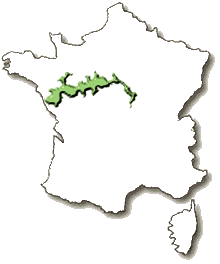 Location: From the Massif Central mountains to the Atlantic coast and Nantes cities. The Loire wine region follows the Loire river in its valley and the rivers flowing into (Cher, Loir, Layon, etc)